the enigma of amigara fault pdf
the enigma of amigara fault pdf
The Enigma of Amigara Fault: A Deep Dive
Amigara Fault’s digital spread via PDF format amplified its unsettling impact‚ fostering online discussion and analysis of Ito’s chilling‚ thought-provoking horror tale.
Junji Ito’s “Amigara Fault” stands as a chilling testament to his mastery of psychological horror‚ initially gaining traction through digital distribution‚ specifically the PDF format. This accessibility broadened its reach‚ allowing the story to permeate online communities and spark fervent discussion. The tale’s brevity belies its profound thematic depth‚ exploring loneliness‚ belonging‚ and existential dread. The PDF’s ease of sharing contributed significantly to its enduring legacy‚ cementing its status as a disturbing classic within Ito’s oeuvre and the horror genre as a whole.
The Core Premise: Holes Shaped Like People
“Amigara Fault” centers around a disturbing discovery: holes appearing in a cliff face‚ each perfectly molded to the shape of a human body. The story‚ widely circulated as a PDF‚ explores the unnerving compulsion these holes exert on individuals. This premise taps into primal fears of confinement and the loss of self. The PDF format facilitated the story’s viral spread‚ amplifying the unsettling impact of Ito’s concept and prompting widespread online theorizing about the holes’ origin and purpose;

Understanding the Narrative
The narrative unfolds through Yoshida and Owaki’s perspectives‚ detailing their escalating dread as they confront the inexplicable‚ personalized holes‚ popularized through PDF sharing.
Yoshida’s Initial Discovery and Fear
Yoshida’s initial encounter with the fault and its disturbingly familiar holes sparks immediate terror‚ a feeling amplified by her lifelong sense of isolation. The PDF’s accessibility allowed widespread sharing of her horrifying discovery‚ resonating with readers’ primal fears. She feels unseen and uncared for‚ a loneliness that subtly prepares her for the fault’s “call.” This pre-existing emotional vulnerability makes the compulsion to enter her hole even more potent‚ as the earth seemingly offers a twisted form of belonging. The story’s impact is heightened by the intimate‚ first-person perspective‚ drawing readers into Yoshida’s growing panic.
Owaki’s Observation and Growing Anxiety
Owaki’s initial skepticism quickly dissolves into mounting dread as he witnesses Yoshida’s descent into obsession with her uniquely shaped hole. The PDF format facilitated the rapid dissemination of this escalating horror‚ allowing readers to experience Owaki’s helplessness. His attempts to comfort Yoshida offer a fleeting moment of connection‚ yet ultimately fail to prevent her tragic fate. Witnessing her disappearance intensifies his own anxiety‚ making the pull of his own hole increasingly irresistible‚ mirroring the story’s themes of loneliness and inescapable destiny.
The Compulsive Urge to Enter the Fault
The story masterfully portrays the overwhelming‚ almost supernatural compulsion drawing individuals towards the holes. The PDF’s accessibility allowed widespread engagement with this terrifying phenomenon‚ amplifying the sense of dread. This urge isn’t rational; it’s a primal‚ irresistible call to belonging‚ fueled by deep-seated loneliness. Owaki’s experience‚ triggered by Yoshida’s disappearance‚ exemplifies this‚ highlighting how isolation intensifies the pull. The holes represent a twisted promise of purpose‚ a horrifying embrace of oblivion.

Psychological Interpretations
The PDF’s circulation sparked analyses of loneliness‚ belonging‚ and existential dread within the narrative‚ resonating with readers’ deepest fears and anxieties.
Loneliness and the Desire for Belonging
The widespread availability of the “Amigara Fault” PDF allowed for extensive discussion regarding its core themes‚ notably the profound human need for connection. Readers frequently highlight Yoshida’s chronic loneliness and the fleeting comfort found in Owaki’s presence. This temporary belonging intensifies the horror when she vanishes‚ fueling Owaki’s own descent.
The story powerfully illustrates how the uniquely shaped holes exploit this inherent desire‚ offering a twisted promise of perfect fitting and acceptance – a chilling metaphor for the lengths people will go to escape isolation.
The Search for Purpose and Meaning
The easy access provided by the “Amigara Fault” PDF sparked debate on the story’s existential undertones. The holes represent a terrifyingly specific “call‚” suggesting a preordained purpose for each individual. This beckoning offers a sense of meaning‚ however horrific‚ to characters grappling with existential emptiness.
Yoshida and Owaki’s compulsion isn’t merely fear‚ but a desperate attempt to fulfill this unknown destiny‚ highlighting humanity’s innate drive to find significance in a chaotic world.
Claustrophobia and Existential Dread (Ito’s Personal Fears)
The widespread PDF distribution allowed readers to intimately experience Ito’s anxieties. His documented claustrophobia powerfully informs the story’s core horror – the inescapable‚ body-shaped holes. This isn’t simply a fear of tight spaces‚ but a metaphor for feeling trapped by fate and societal expectations.
“Amigara Fault” embodies existential dread‚ questioning free will and the meaning of existence‚ amplified by Ito’s personal struggles with confinement and the unknown.
Symbolism and Themes
The PDF’s accessibility broadened interpretations of the holes as representing inner emptiness and the fault line as societal conformity’s chilling metaphor.
The Holes as Representations of Inner Emptiness
The widespread PDF distribution of “Amigara Fault” facilitated deeper exploration of its core symbolism. The holes‚ perfectly molded to individual forms‚ aren’t merely physical spaces but potent representations of profound inner emptiness. This emptiness drives the characters’ compulsion‚ mirroring a desperate search for completion and belonging.
The story suggests that each person carries a void‚ a lack of purpose or connection‚ and the holes offer a terrifyingly seductive illusion of fulfillment. The PDF’s ease of sharing allowed readers to collectively dissect this theme‚ recognizing the holes as externalizations of internal struggles with loneliness and existential angst.
The Fault as a Metaphor for Societal Conformity
The accessibility of “Amigara Fault” through PDF format spurred discussions on its societal commentary. The fault line‚ and the holes within‚ can be interpreted as a chilling metaphor for the pressures of conformity. Individuals‚ shaped by societal expectations‚ feel an irresistible pull towards fitting in‚ even if it means self-destruction.
The story highlights the dangers of losing individuality in the pursuit of belonging‚ with the holes representing pre-defined roles. The PDF’s viral spread amplified this message‚ prompting readers to question the forces that shape their own identities and desires.
The Loss of Individuality and Self
The widespread PDF distribution of “Amigara Fault” intensified its exploration of self-loss. The story powerfully depicts characters surrendering their identities to the beckoning holes‚ mirroring a terrifying loss of autonomy. This compulsion to ‘fit’ represents a surrender to external forces‚ erasing personal desires.
Each character’s descent symbolizes the erosion of the self‚ driven by a desperate need for belonging. The digital format allowed broader access to this disturbing theme‚ prompting reflection on the fragility of individual identity.
Character Analysis
Yoshida and Owaki’s fates‚ widely shared through the PDF‚ highlight isolation and the irresistible pull towards the holes‚ fueling the story’s haunting impact.
Yoshida: A Portrait of Isolation
Yoshida’s profound loneliness‚ readily accessible within the circulated PDF‚ is central to her tragic arc. She confesses to a lifelong feeling of being uncared for‚ a void that initially finds solace in Owaki’s affection. However‚ this brief connection is brutally severed by her compulsion.
The PDF’s distribution emphasizes how her desperate need for belonging ironically leads to her self-imposed entombment. Yoshida’s character embodies the story’s core theme: the terrifying allure of a place where one feels uniquely‚ disturbingly‚ needed – even if it means oblivion.
Owaki: The Struggle Against the Inevitable
Owaki’s initial resistance‚ highlighted in the widely shared PDF‚ showcases a desperate attempt to defy the fault’s pull. He observes Yoshida’s descent with growing dread‚ yet ultimately succumbs to the same irresistible urge. The PDF format allows readers to trace his escalating anxiety and helplessness.
His entry following Yoshida’s disappearance isn’t merely surrender‚ but a mirroring of her loneliness; her absence amplifies his own‚ making the hole’s call overwhelmingly powerful and tragically unavoidable.
The Role of Minor Characters in Amplifying the Horror
Within the readily accessible PDF‚ minor characters serve as chilling indicators of the fault’s pervasive influence. Their quiet acceptance‚ or swift disappearances‚ underscore the inevitability facing Yoshida and Owaki. These fleeting figures heighten the sense of dread and isolation‚ demonstrating the fault’s widespread‚ unsettling grip.
They exemplify the story’s theme of conformity‚ subtly suggesting a community already resigned to its fate‚ amplifying the horror for the protagonists and the reader.
The Unexplained Phenomenon
The PDF reveals the fault’s origin and the “call” remain mysteries‚ with the fate of entrants unknown—a core element of Ito’s unsettling narrative.
The Origin of the Amigara Fault
The PDF offers no concrete explanation for the fault’s emergence‚ deepening its unsettling nature. Ito intentionally leaves the origin ambiguous‚ fueling speculation and existential dread. Is it a natural geological anomaly‚ a manifestation of collective unconsciousness‚ or something far more sinister? The story doesn’t provide answers‚ instead focusing on the psychological impact of the phenomenon.
The lack of origin details enhances the horror‚ suggesting a force beyond human comprehension. This deliberate obscurity is a hallmark of Ito’s style‚ prompting readers to confront their own fears and interpretations.
The Nature of the “Call” of the Holes
The PDF reveals the “call” as an irresistible‚ almost primal urge‚ intensifying with proximity and feelings of isolation. Yoshida and Owaki experience a growing compulsion‚ fueled by loneliness and a desperate need for belonging. This force seems to exploit pre-existing emotional vulnerabilities‚ offering a perverse sense of purpose.
The story suggests a supernatural element‚ perhaps a malevolent entity preying on human despair‚ but the exact nature of the call remains chillingly undefined.
The Fate of Those Who Enter
The PDF offers no definitive answer‚ amplifying the horror. Those who succumb to the “call” simply vanish within their perfectly-shaped holes‚ leaving behind only unanswered questions and escalating dread. The story implies a complete loss of self‚ a merging with the earth itself‚ but the specifics remain terrifyingly ambiguous.
This lack of resolution contributes to the story’s lasting psychological impact‚ prompting endless speculation about what awaits within.

Cultural and Philosophical Context
The PDF’s accessibility broadened exposure to Ito’s exploration of Japanese conformity‚ existential dread‚ and the unsettling nature of body horror themes.
Japanese Concepts of Conformity and Group Identity
The PDF’s widespread circulation allowed broader engagement with the story’s potent commentary on Japanese societal pressures. “Amigara Fault” deeply resonates with cultural anxieties surrounding the intense need to belong and the suppression of individuality. The holes‚ perfectly molded to each person‚ symbolize an extreme form of fitting in—a complete merging with a pre-defined space. This reflects the historical emphasis on group harmony (“wa”) in Japan‚ where standing out can be viewed negatively. The compelling‚ almost irresistible urge to enter the holes can be interpreted as a dark metaphor for the societal expectation to conform‚ even at the cost of self.
Existentialism and the Absurdity of Existence
The readily available PDF format facilitated discussions on “Amigara Fault’s” existential themes. The story presents a chilling depiction of humanity’s search for purpose in a meaningless universe. The holes offer a seemingly pre-ordained destiny‚ a bizarre “higher purpose” that lures individuals towards oblivion. This echoes existentialist thought‚ highlighting the absurdity of existence and the freedom—and terror—of creating one’s own meaning. The characters’ compulsion to enter embodies a surrender to the void‚ questioning the value of individual will.
The Influence of Body Horror in Ito’s Work
The PDF’s widespread circulation allowed greater access to Ito’s masterful use of body horror. “Amigara Fault” isn’t overtly graphic‚ yet the idea of being perfectly molded into the earth‚ consumed by a hole shaped like oneself‚ is profoundly disturbing. Ito frequently explores anxieties surrounding the body‚ its fragility‚ and its potential for grotesque transformation. This story exemplifies his ability to evoke dread through psychological horror‚ rather than explicit gore‚ resonating deeply with readers.
Analyzing the PDF Format and Distribution
Digital PDFs enabled easy sharing of “Amigara Fault‚” boosting its popularity and fostering online communities dissecting Ito’s unsettling narrative and themes.
The Popularity of Digital Distribution of Ito’s Work
Junji Ito’s work‚ including “Amigara Fault‚” gained significant traction through digital distribution‚ particularly the PDF format. This accessibility bypassed traditional publishing limitations‚ allowing fans worldwide to easily discover and share his unsettling stories. The PDF’s portability and ease of access fostered a thriving online community dedicated to analyzing and discussing Ito’s art.
This widespread availability fueled the story’s enduring legacy‚ enabling continuous engagement and interpretation‚ solidifying “Amigara Fault’s” place as a modern horror classic.
Accessibility and the Spread of the Story
The PDF format dramatically increased “Amigara Fault’s” accessibility‚ circumventing geographical barriers and financial constraints associated with physical copies. This ease of distribution facilitated rapid dissemination across online platforms‚ forums‚ and social media. Consequently‚ the story reached a broader audience‚ sparking widespread discussion and fan theories.
The digital format’s shareability ensured the story’s continued circulation‚ cementing its status as a frequently revisited and analyzed piece of horror literature.
Impact of the PDF Format on Reader Experience
While offering convenience‚ the PDF format presented a unique reading experience for “Amigara Fault.” The static layout‚ unlike a flipping page‚ potentially altered pacing and suspense. However‚ digital zoom allowed for detailed examination of Ito’s intricate artwork‚ enhancing the horror.
Furthermore‚ the PDF’s portability enabled readers to engage with the story across various devices‚ fostering a more intimate and readily available encounter with its disturbing narrative.

Fan Theories and Interpretations
Online PDF distribution fueled diverse theories – gateways to other dimensions‚ punishment for sins‚ or commentaries on human nature – expanding the story’s enigma.
The Holes as a Gateway to Another Dimension
A compelling fan theory posits the Amigara Fault holes aren’t merely physical depressions‚ but portals to another dimension‚ perfectly mirroring individuals as a lure. The PDF’s accessibility allowed this interpretation to flourish‚ with readers speculating about the nature of this realm and the fate of those who entered. Is it a place of ultimate belonging‚ or a terrifying unknown? The story’s ambiguity‚ amplified by its digital spread‚ encourages this otherworldly reading‚ suggesting the holes offer escape from existential loneliness‚ but at a dreadful cost.
The Fault as a Punishment for Past Sins
Another intriguing fan theory‚ widely circulated through the PDF’s digital distribution‚ frames the Amigara Fault as a karmic reckoning. The holes‚ in this view‚ represent a punishment for unaddressed guilt or past transgressions‚ tailored to each individual’s hidden failings. The irresistible urge to enter symbolizes a subconscious acceptance of deserved suffering. This interpretation resonates with Ito’s broader themes of inescapable fate and the darkness within humanity‚ amplified by the story’s readily available digital format.
The Story as a Commentary on Human Nature
The widespread accessibility of “Amigara Fault” via PDF has fueled debate about its core message: a bleak assessment of human nature. The story exposes our desperate need for belonging and purpose‚ even if it leads to self-destruction. The holes exploit inherent loneliness‚ suggesting we’re easily compelled towards even horrifying “solutions.” Ito’s work‚ easily shared digitally‚ highlights a disturbing truth about our susceptibility to primal urges and societal pressures.
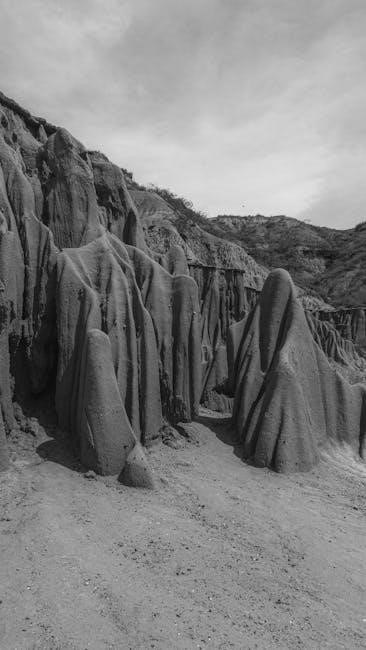
Junji Ito’s Artistic Style in Amigara Fault
Ito’s masterful panel layout and detailed visuals‚ even in black and white‚ heighten the horror‚ effectively conveyed through the PDF’s digital format.
Panel Layout and Pacing
Ito’s strategic panel layout in “Amigara Fault‚” even within the confines of a PDF‚ builds tension remarkably well. The pacing starts slowly‚ establishing the unsettling discovery of the holes‚ then accelerates as the characters grapple with their compulsion. Close-ups emphasize the characters’ growing dread and the disturbing detail of the holes themselves.
The PDF format allows for a focused‚ linear reading experience‚ enhancing the story’s claustrophobic atmosphere. Ito utilizes full-page spreads to showcase the scale of the fault and the overwhelming number of holes‚ maximizing the visual impact and contributing to the story’s overall sense of dread.
Use of Visual Detail to Enhance Horror
Junji Ito’s masterful use of visual detail in “Amigara Fault‚” even when experienced through a PDF‚ is central to its horror. The precise rendering of the human-shaped holes‚ their textures and subtle imperfections‚ creates a deeply unsettling effect. The characters’ expressions‚ meticulously drawn‚ convey mounting fear and resignation.
The PDF format preserves the stark contrast of Ito’s black and white artwork‚ amplifying the story’s oppressive atmosphere. Every line and shadow contributes to the growing sense of dread‚ making the visual experience profoundly disturbing and unforgettable for the reader.
The Impact of Black and White Imagery
Ito’s deliberate choice of black and white imagery in “Amigara Fault‚” powerfully retained within the PDF format‚ intensifies the story’s psychological horror. The lack of color heightens the sense of isolation and despair‚ mirroring the characters’ inner emptiness. Shadows become more pronounced‚ obscuring details and fueling the feeling of unease.
This stylistic choice focuses attention on texture and form‚ emphasizing the grotesque nature of the holes and the characters’ deteriorating mental states‚ creating a truly haunting visual experience for the reader.

The Story’s Lasting Impact
“Amigara Fault’s” PDF accessibility fueled continued online discussion‚ influencing subsequent horror works and cementing its status as a deeply disturbing‚ classic tale.
Influence on Other Horror Works
Junji Ito’s “Amigara Fault‚” widely disseminated through PDF formats‚ has subtly permeated modern horror‚ inspiring themes of inescapable fate and body horror. The story’s core concept – a personalized‚ beckoning void – echoes in narratives exploring existential dread and the loss of self. Its influence isn’t always direct imitation‚ but rather a tonal resonance‚ particularly in works dealing with psychological torment and the unsettling allure of the unknown. The PDF’s accessibility allowed for broader consumption‚ fostering a generation of creators influenced by Ito’s unique brand of cosmic horror and the story’s haunting imagery.
Continued Discussion and Analysis Online
“Amigara Fault’s” enduring power is evident in its persistent online presence‚ fueled by easy PDF distribution. Forums and social media platforms host countless threads dissecting its symbolism‚ psychological depth‚ and philosophical implications. Fan theories abound‚ ranging from interdimensional gateways to karmic punishment‚ demonstrating the story’s capacity to provoke thought. The digital format facilitated widespread access‚ creating a vibrant community dedicated to unraveling the enigma and sharing interpretations of Ito’s masterpiece‚ ensuring its continued relevance.
Why “Amigara Fault” Remains a Disturbing Classic
“Amigara Fault” endures as a chilling classic due to its potent exploration of loneliness‚ belonging‚ and existential dread‚ amplified by its concise yet impactful narrative. The story’s unsettling premise‚ coupled with Ito’s masterful artistry‚ creates a uniquely disturbing experience. The readily available PDF format broadened its reach‚ cementing its status within the horror community and ensuring continued analysis‚ solidifying its place as a truly unforgettable and profoundly unsettling work.